
Steve Jobs and Mark Zuckerberg have more in common than tech industry success and monochrome wardrobes—they also notoriously screwed over their cofounders. And they’re not (by a long shot) the only ones. After all, team-based issues are among the top reasons startups fail.
But there are also teamwork success stories.
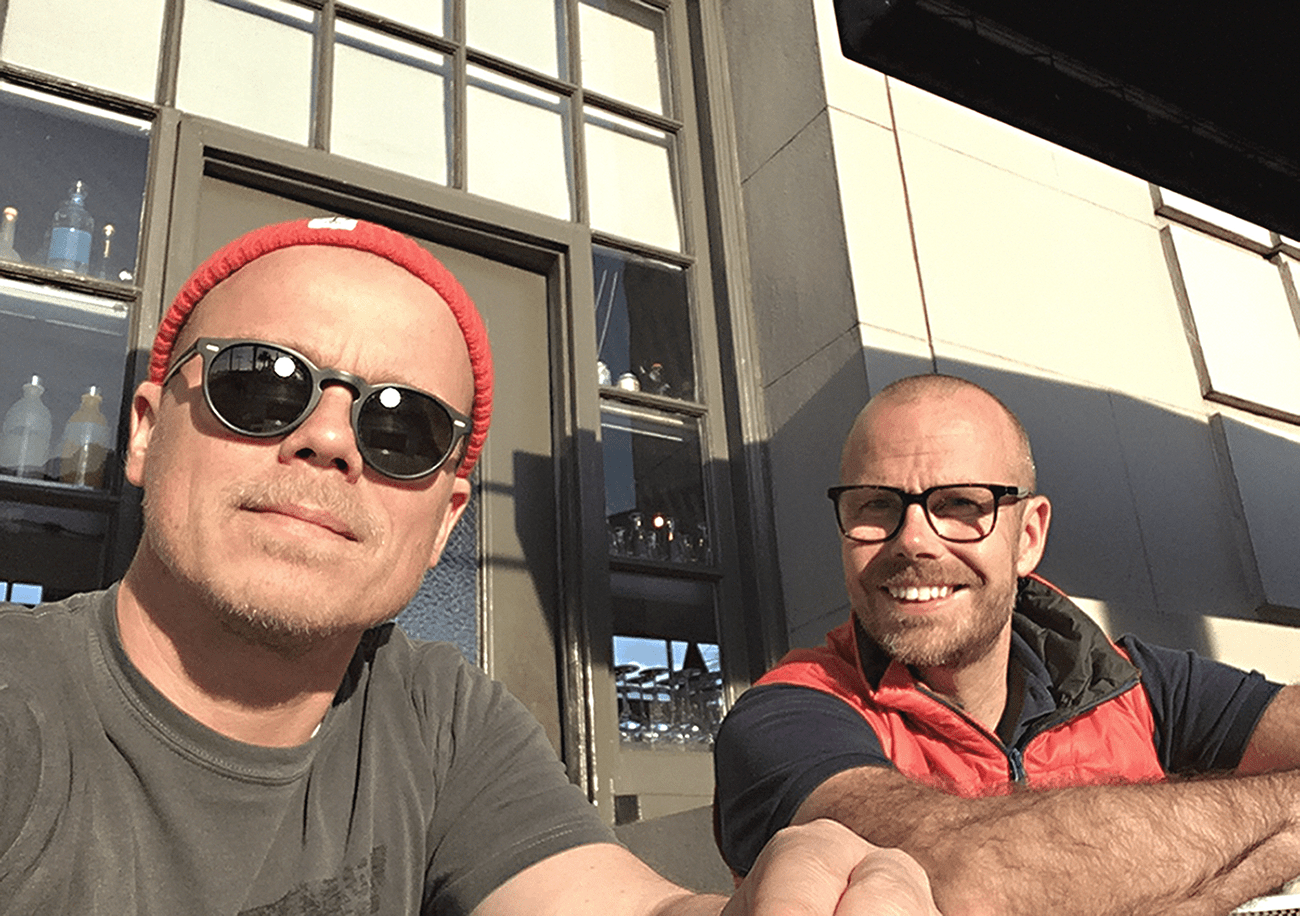
Henrik Bergqvist has been launching startups with his best friend Mathias Bjorkholm for years. The website for Pickit, their greatest entrepreneurial success, provides a clue to their survival as friends and founders: “Total opposites, the Swedish entrepreneurs would probably have been fierce enemies in another life, but instead, they combined their passion for technology and design to fight boring presentations instead of one another.”
We sat down with Bergqvist to learn how his friendship with Bjorkholm survived multiple startup ventures, won over Microsoft as a major investor, and continued to grow as Pickit became the most-downloaded Office add-in worldwide.
Why did you decide to start a business with someone who’s so different from you?
It’s funny—we didn’t really understand how different we were at first. It took us six months to understand that we didn’t understand each other. We liked each other on a human level. There was chemistry. We had the same values. We love to work, but we also want the freedom to hang around with our kids.
But we’re also really different. He’s a sales and business development guy, and I come from marketing and brand design. Mathias is always questioning me because he thinks marketing and branding is just a cost for a company. I’ve been trying to explain—for years—what this is, why it’s important. But I think that’s been good for me.
I really believe in diversity. We’re launching a product called Pickit Enterprise, and I’m working with the tech team. I have a sense of what the customer needs, but I’m not sure. I’m not a user. So the more people we have with different views on things and different cultural backgrounds, the better.
What have been some benefits of that diversity?
Actually, the idea for Pickit came out of Mathias and me being different. We had this consulting firm, and over the years he’d come to me again and again asking me to fix his presentations. And his presentations were really bad—actually embarrassing. So I did it for him, but mostly for me.
That went on a couple of years until mobile technology happened and people started uploading like three hundred million images every day. Everyone suddenly had a camera, and we realized those images could be compiled into an image bank that people could use. People like Mathias—white-collar people who do two years of research, and then get ten minutes to deliver it all without knowing anything about design or storytelling. They don’t get any help beyond clip art. We started to do some research and found that it’s about two billion people who fit that description. We also realized that all the image banks, all the creative solutions, are all targeting creative people. No one is targeting the non-creatives.
Our differences continued to be a benefit after we got the idea. Mathias knew the image resource limitations of Google, and I knew exactly how to find, buy, and use images legally. We found the need for this product and had the balanced experience to pursue it because we were different.
So you’d disagree with the advice to never start a business with a friend?
I think it’s lonely if you are on top by yourself. And there might be stories where everything is just positive and everything goes like you plan, but I think it’s very rare. There are ups and downs all the time, and it’s been like that for us. When I’m down, Mathias is up. He can help me, and vice versa.
Mathias and I disagree on many, many levels, but as friends we are very close, and we would never jeopardize that. He’s always my best friend, even though I hate him sometimes. [laughs] There’s so much value to having a wingman.
What’s your top advice for determining if you have the right partner?
If you’re thinking about starting a company, my tip is this: don’t be too close in skills to your partner. That way, you’re not always thinking you could do it better. When Mathias challenges me, he’s actually curious. He’s seriously wondering if something has any value.
If you have different personalities, make sure that you connect on a greater scale. What do you think about the world? What do you think about family? Mathias and I always have those common things to fall back on.
It’s also very important to be clear about what you actually have as a goal from the beginning. Is it to buy a car or is it to save the world? How many people do you want to work with? Do you want to have a big company? Try to find someone who is on the same page, but with different skills.
Even with the right partner, there are bound to be disagreements. What’s your advice for resolving conflict with a business partner in a healthy way?
If you don’t know each other or aren’t close, it’s better to back off and be a little bit more open minded. Ask questions. We have one person on our team who’s been really good at saying, “Hey. Ask the question so we can try to solve it together.” Don’t throw the solution on the table first because people won’t even know the problem. Especially as your team grows, talk about problems and pain points and ask questions like why.
We’re more professional now, but the way Mathias and I argued in the beginning wasn’t always healthy for the organization. We disagreed when we had other people in the room, for example. If you’re angry at someone, wait 24 hours. Don’t write that email, or at least save it as a draft. Go back in a couple of hours and read it again before hitting send.
And remember, it’s not about winning. It’s about moving the company forward.
Once you’ve got the right cofounder and find a rhythm where everyone gets along, how do you actually find success?
Pickit will be eight years old this year, and we’ve had a lot of success. We’re partnered with Microsoft, and we’re the top downloaded add-on for Office. People—even people in Microsoft—think we’re this company with thousands of people. But we’re not. We’re only around thirty.
One of the key determinants for being successful is to be patient. Be like a goldfish. Let every day be like, “Whoa! What’s this thing?!” And you have to be a little bit stupid because when things are not going that well, you can’t give up. If you’re really solving a problem for people, you just haven’t had this product-market fit yet. It takes time. A cofounder is helpful to pull you through those slumps and disappointments.
Many startups that have success fast—it’s actually bad. In those cases, you haven’t really found your product-market fit. You’ve just found a trend. So you scale everything, but as soon as a competitor comes along, you find you’re not really solid as a company. If you want to drive something, if you have a calling you believe in, don’t rely on luck. It’s better to work with a business model.
Jobs and Zuckerberg are rare cases in more ways than one. They both came out on top, but more often, it’s both cofounders who come tumbling down when conflict can’t be overcome. For a healthy company, relationship, and career, be like Bergqvist and Bjorkholm: leave fierce rivalry for another life.
Related Articles