

Leadership with Passion through Kokorozashi
The key ingredient to success? Passion.
Finding your kokorozashi will unify your passions and skills to create positive change in society. This GLOBIS Unlimited course will help you develop the values and lifelong goals you need to become a strong, passion-driven leader.
“Purpose” has grown as a business buzz word since the late nineties, and there’s a big reason why: Companies that embrace a purpose mindset tend to perform better. Employees fulfilled by a sense of purpose tend to stay at one company for longer, tend to outperform their peers, and tend to end up in higher positions within a company.
But when purpose is so easily confused with corporate social responsibility and there’s no clear delineation between passion and purpose, it can be difficult to chart a course forward and find your sense of purpose.
As it turns out, there’s more than one way to get there.
Dr. Jane Horan, founder of The Horan Group and purpose expert, helped us shed some light on purpose in 2020 and how employees at all levels can pursue purpose to enrich their lives.
Why wait until you hit mid-career to find purpose? I suggest starting now.
Dr. Jane Horan
Your sense of purpose depends on your background.
Insights: You’ve coached just about everyone—the executives and the newbies, the baby boomers and Gen Zs, in nearly every country in East and Southeast Asia. What differences have you observed about sense of purpose?
Leadership with Passion through Kokorozashi
The key ingredient to success? Passion.
Finding your kokorozashi will unify your passions and skills to create positive change in society. This GLOBIS Unlimited course will help you develop the values and lifelong goals you need to become a strong, passion-driven leader.
Dr. Horan: There are many different paths to purpose. I heard a variety of comments in my workshops. In Japan, for example, people will say, “Oh, I need to wait until I get a little bit older to think about purpose.” In China, I heard some participants saying, “The work is the work. After I’ve made gazillion dollars, then I’ll do the purpose thing.” But I can’t agree with that! That’s how we get people in their thirties or forties saying, “I hate my life.”
Why wait until you hit mid-career to find purpose? I suggest starting now.
Insights: It’s hard to imagine younger generations putting off purpose. So many young people seem to resent doing anything they find unfulfilling. Have you seen any generational differences?
Dr. Horan: Haha, yeah. In my conversations and research, the younger generations—millennial generation and Gen Z, or the Satori Generation in Japan—have a real drive for purpose. Like, some will say, “I’m not going to join a company unless it’s joined up with what I believe is important.” And I also found these conversations around meaningful work skewed a lot younger in Asia.
In China in particular, research suggests young people have been asking these deep, big questions in their late twenties: Who am I? What’s the meaning of life? What am I doing? These are powerful questions, and they link to uncovering purpose. So I’ve found in my coaching that the younger workforce will turn down a job or not work for a company or even leave a company if that purpose is misaligned. I’ve also found employees leaving a firm if the stated values don’t match the firm’s culture or how things work.
And then there’s a gap. Some of the research has indicated that Gen X, the generation between millennials and baby boomers, may not see purpose as a driver—though of course, it’s hard to generalize across entire generations.
But once you get to the baby boomers, there’s definitely more evidence that they’re purpose oriented. They’re just at a different level in their life, pre-retirement or what some may call “encore careers” they’re thinking of leaving. They need something worth staying for. It’s this fascinating group of people that, at different parts of their lives, are looking for purpose.
And then I found across all of these generations, women are more purpose oriented no matter what.

Women are more purpose driven.
Insights: Your book also mentions that women are more purpose oriented. Can you talk a little more about that?
Dr. Horan: When I was interviewing women across the Asia Pacific Region, many kept kind of referring to this sense of spirituality. But as I dug deeper, it wasn’t necessarily spirituality from a religious sense. It was actually purpose, but they didn’t name it as purpose.
They were talking about having an impact. And so it was, “I need to have a job when I get back from leave,” whether the leave was a sabbatical or maternity leave, whatever it was. They wanted to go back to a job that had meaning and impact, and if they couldn’t have that, they were going to leave. And I thought, “Oh, this is interesting,” because we always talk about women leaving organizations at critical points in their careers. And so there was something around purpose, and they don’t see it as separate from their overall life purpose, either.
Insights: Do you have any theories why women become more purpose oriented?
Dr. Horan: I have some ideas, and I would take a stab at it like this: first of all, I found quantitative data from Aaron Hurst at Imperative Consulting. He worked with NYU to survey the state of purpose in the workforce as a whole and showed that women are more purpose oriented than men. This confirmed what I saw in my coaching and what I found in my research.
So women (globally, but especially in Asia) are viewed as responsible for the parents and the children—though this notion is changing now.
An important point for organizations to understand is that when women go back to work, they’re looking for a job that matters. A role that has impact. There’s this sense of, “I’m smart and I know what I’m doing. Don’t put me in a paper-pushing position. I’ve got other things I can do.” And true to form, if relegated to meaningless tasks, women will often vote with their feet and leave.
Many single women said something similar. It doesn’t make a difference how much money they were making. They knew they could find something else that would be more fulfilling. Having a meaning in life is just pre-baked into our cultural expectations for women.
And all the women interviewed were multifaceted. I think our bigger responsibilities to the world that make us think differently about work. It’s about a joined-up approach to work and life. I don’t know if this is the true answer. It’s a hard question, but that’s how I started to unravel purpose.
Clear up [purpose] first. And then let yourself go—don’t bother asking for permission. Still do what you’re doing at work, of course, but don’t ask permission to do other things. Don’t try, just do.
Jane Horan
There is no “right” way to do purpose.
Insights: We took a look at Aaron’s 2019 Workforce Purpose Index. It seems like a sense of purpose at work is more important than ever, and yet people are still struggling to figure themselves out.
Dr. Horan: Yeah, I think that’s why it’s important to find purpose every day. Getting people to think, “What’s that one thing that I really want to do, and how do I bring that into work?”
Insights: It seems a lot of people want that sense of purpose, but still feel like they need permission to do what they want to do.
Dr. Horan: I think you’re right about permission. I’ve been in Asia for a very long time, and I’ve noticed a tendency to ask for permission. To be fair, it happens in North America too, depending on the organizational culture. This sense of, “Well, I have to ask, or I can’t really do that.”
Whatever you want to do, I think you just have to try it. I’ve always had people say, “I just want that big job!” And then they get to that job and they hate it. You have to try it first. It might not be what you want.
I find this typically happens when you’re not really clear on your purpose. So clear that up first. And then let yourself go—don’t bother asking for permission. Still do what you’re doing at work, of course, but don’t ask permission to do other things. Like Yoda says, don’t try, just do. I’d just add this: be clear on what you want before you do.
It hit me really hard. Like, there really are people like this out in the world thinking, “I’ll just do this for a while, but then I’ll write some poetry.”
Jane Horan
Insights: These days, there are a lot of slow culture shifts moving in that direction of finding your sense of purpose and embracing what you want to do. Do you think it will get easier to do the do part?
Dr. Horan: You know, I was facilitating a workshop with a group of very young bankers just hired for a Swiss bank. And I sat at the lounge table with a group from China and this young man—I think it was his first job—said to me, “Look, I’m just doing this job to make a lot of money, but I’m planning to quit in five years.”
I’m like, “Okay, but what do you plan to do after 5 years?” And he goes, “I want to be a poet.”
When people say that sort of thing to you, you know they’re being authentic. It hit me really hard. Like, there really are people like this out in the world thinking, “I’ll just do this for a while, but then I’ll write some poetry.”
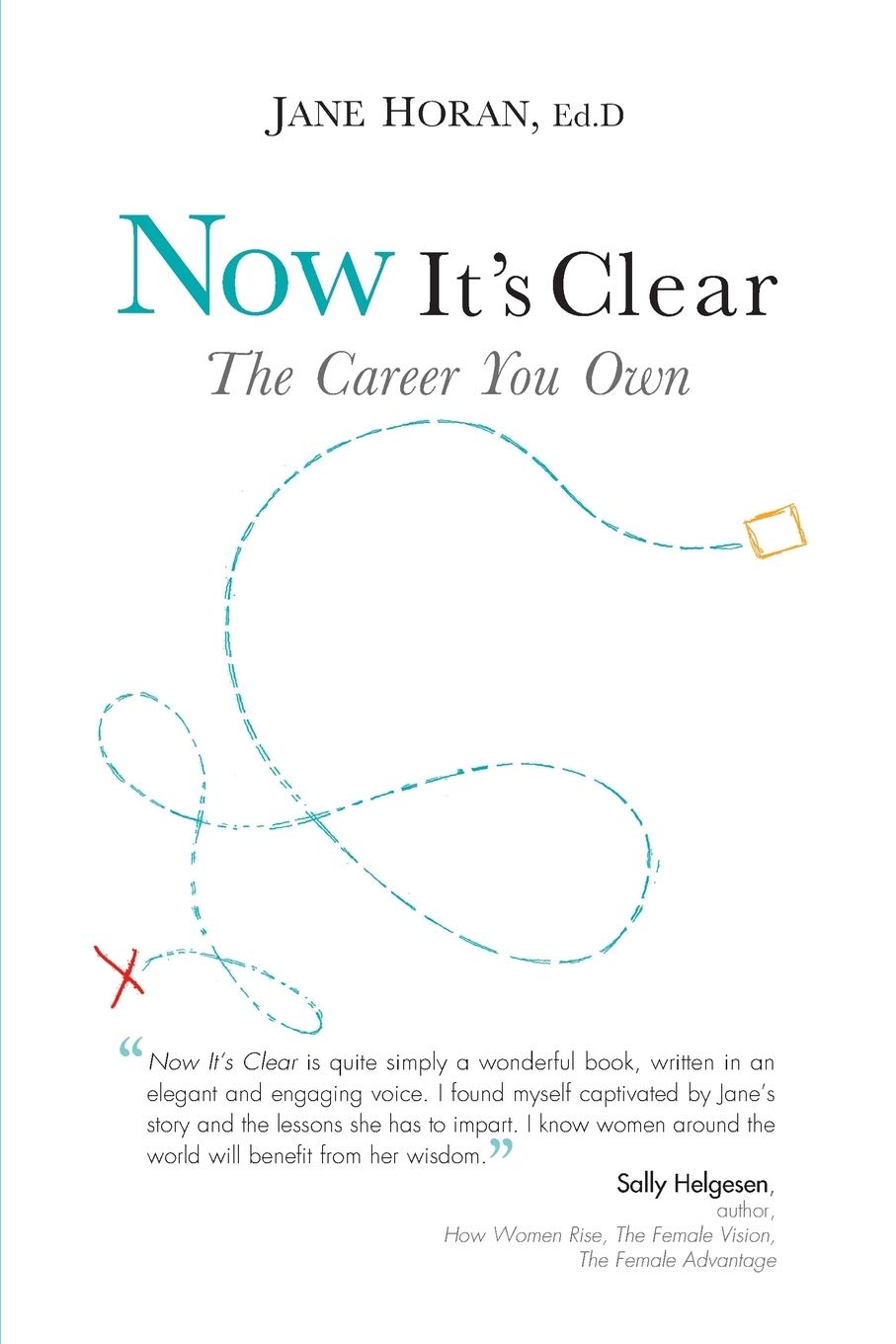
If you’re seeking your own sense of purpose, you can find Dr. Horan’s book, Now It’s Clear: The Career You Own on Amazon, online, or wherever good books are sold.
Related Articles

How Recruiting Companies in Japan Are Connecting Foreign Grads with Global Careers

This Gen Z Entrepreneur is Leading With Passion in the New Business Era